

Responding Rather Than Reacting
Slowing Down to Fast-Track Your Relationship

This is Relationship Reflections- a monthly newsletter that explores common themes of couples counseling, examines psychoeducational tools, and advocates for intentional relational care.
What’s in this newsletter:
a review of responses and reactions
a resource for learning to practice mindfulness
a request for increased awareness
Hi All,
If I were to ask you, “how have you been since the last newsletter went out?” I expect many of you would tell me “busy”. So many of my sessions start with clients telling me how busy they are. This makes sense- many of my clients are young professionals trying to balance careers, social lives, their relationship, and planning a wedding. It’s no surprise that time feels tight and efficiency is important to them! This shows up in our work as a desire for effective, streamlined communication, staying on the same page as often as possible, and efficient repair when inevitable miscommunications pop up.
One of the fundamental skills I encourage partners to develop is awareness, because it is at the root of all interpersonal growth. Once clients are able to notice, they are able to make empowering changes. Practicing mindfulness can be an effective way to increase awareness. Mindfulness is the practice of intentionally focusing on the present moment, without judgment. It is often used as a therapeutic technique to reduce stress, improve mental clarity, and promote overall well-being. Mindfulness involves paying attention to sensations, thoughts, and emotions as they arise, and learning to accept them without attaching meaning or reacting to them impulsively.
There are many ways to incorporate mindfulness into daily life, such as through meditation, deep breathing exercises, or simply taking a few moments to pause and be fully present in any given task. Research has shown that regular mindfulness practice can lead to a range of benefits including reduced anxiety, improved concentration, and better emotional regulation.
Mindfulness in communication is the practice of being fully present and aware during interactions with others. It involves listening actively, without judgment or distraction, and responding thoughtfully and authentically. By practicing mindfulness in communication, couples can improve their ability to understand each other's thoughts and feelings, be more empathetic and compassionate, and reduce conflict and misunderstandings.
You might be wondering, what does mindful communication really look like in day-to-day life? One of the key components of mindful communication is responding rather than reacting. So, let’s review the differences between responding and reacting in communication.
Simply put, responding involves taking a moment to pause, reflect, and consider before speaking or acting, while reacting is often impulsive and driven by strong emotions.
Research has shown that thoughtful and curious responses are more effective in promoting healthy communication in couples than rash reactions. A study published in the Journal of Marriage and Family found that couples who practice responsive communication have higher levels of relationship satisfaction and lower levels of conflict. By taking the time to respond rather than react, we can build trust, empathy, and understanding in our relationships.
When we react impulsively, we are more likely to say things we don't mean, escalate conflicts, and damage our relationships. On the other hand, when we respond thoughtfully, we can better express our feelings and needs, understand our partner's perspective, and work together to find solutions. So, how can we cultivate the skill of responding rather than reacting in our interactions with our partners? Here are a few tips to help you get started:
Take a deep breath: When you feel yourself getting emotional or triggered, take a deep breath to calm your nervous system and give yourself a moment of space before responding.
Sometimes this suggestion can sound patronizing or oversimplified, but breathing is controlled by a part of the brain that bridges our reactive responses to our centers for complex thought, logic, and reason. So, by engaging our breath, we can re-engage our ability to respond.
Listen actively: Before you respond, make sure you fully understand your partner's perspective by listening actively and empathetically.
Remember, your partner is your best friend and the person you most love and respect. Active listening is a great way to demonstrate consideration for them while also learning from their viewpoint.
Reflect on your feelings: Take a moment to notice your own feelings and needs before responding. This can help you communicate more effectively and assertively.
Check in with yourself about what is really most important about whatever the topic at hand may be, there’s often something deeper going on which is important to share with your partner.
Ask questions: Engage your partner in a curious and open-minded conversation by asking questions to clarify their feelings and needs.
Think of communication like a three-legged race, you can only move as quickly as you can move together. Make sure you completely understand your partner’s perspective before continuing in the content together.
Responding rather than reacting is a skill that takes practice and patience. By prioritizing thoughtful and curious responses in your interactions with your partner, you can build a stronger and more fulfilling relationship. Overall, mindfulness in communication can help couples to foster deeper connections, enhance intimacy, and build stronger, more fulfilling relationships. Some tips for incorporating mindfulness in communication in relationships include:
Paying attention to your partner's body language and tone of voice to better understand their emotions.
Taking a pause before responding to give yourself time to consider your words and respond in a calm and thoughtful manner.
Practicing active listening by giving your partner your full attention, making eye contact, and paraphrasing what they have said to ensure understanding.
Being curious and asking open-ended questions to encourage your partner to share more deeply.
Practicing self-awareness and noticing your own thoughts and feelings during communication to avoid reacting impulsively.
The resource this month is an introductory tool to mindfulness called 54321. It can be used in many variations and at almost any time. When practicing with this tool, try to be as specific as possible. The objective is to be as aware as possible of the present moment you are experiencing, to stay focused, and strengthen your internal locus of control. There is not one right way to use this tool so challenge yourself to see how many applications and variations you can find for it!
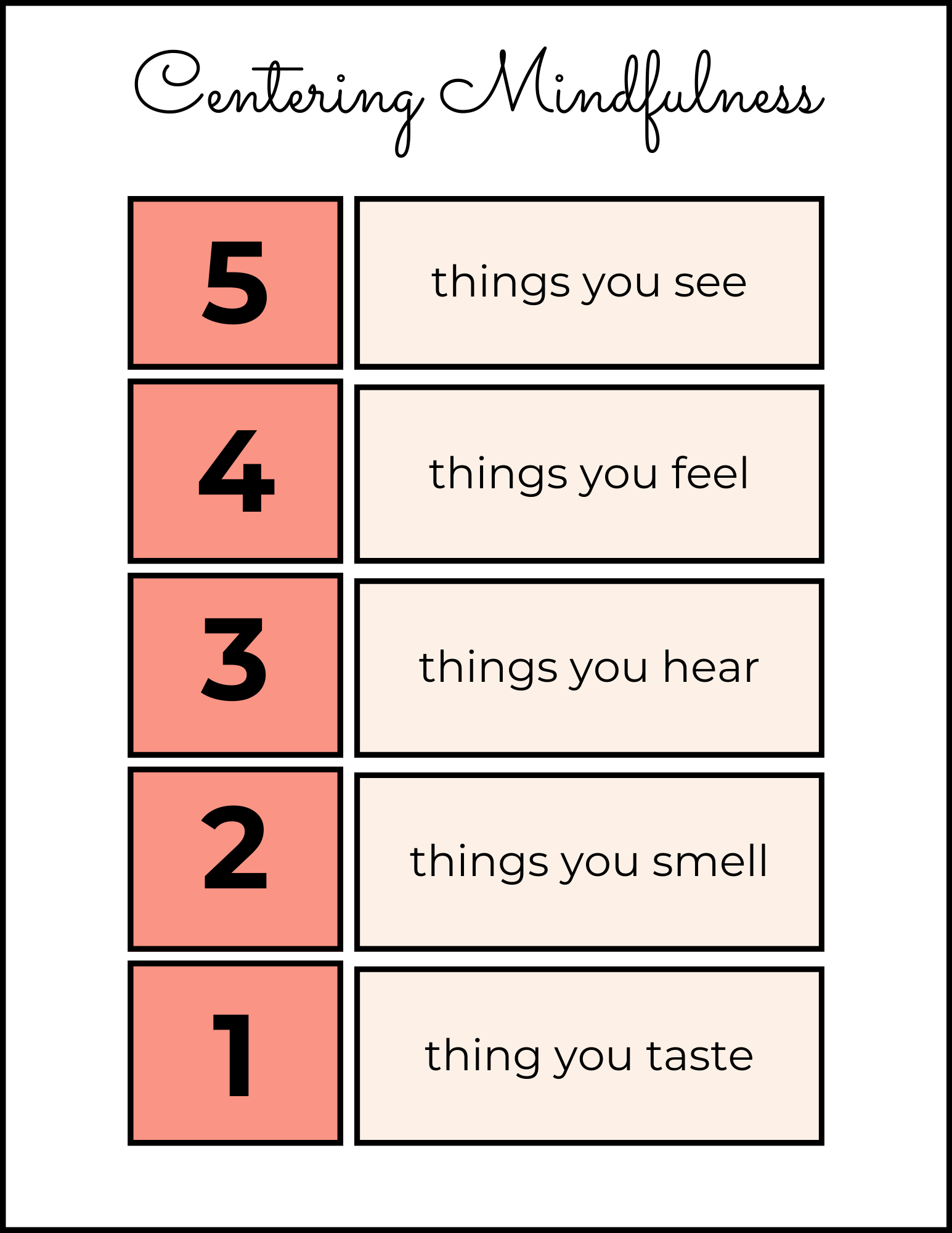
The request this month is simple- can you notice more? Can you be more present, intentional, and mindful? And when you are, can you respond rather than react when connecting with your partner?
We’d love to hear how you’re finding ways to practice mindfulness with your partner! And, as always, if you’re in Texas and ready to grow your connection and communication with your partner, we’d love to schedule a free consultation to answer any questions you may have and see if our services are the right fit for your needs.
Warmest Regards,
Lauren Ross, LMFT LPC
What's your read on Relationship Reflections?
Is this format working for you?
If there's a section you'd like more content in, click on a link to let us know: